


BOCCADIGABBIA
“The roots of a family, the story of a winery between past and present.”
Boccadigabbia is a winery that bonds history and family. Was once one of the “one hundred poderi” that made the Amministrazione Bonaparte of Civitanova Marche. Now, the Alessandri family carries on the great wine tradition, always with a glimpse into the future.
Agnese e Lorenzo are the third generation that work in the winery, and their mission is to give value to the indigenous grapes of the Macerata area. In particular, they want to make the Ribona, an extremely rare variety, known all over the world.
The Ribona grape variety, also known as Maceratino, is a hidden gem of the Marche region, grown almost exclusively in the hills of the province of Macerata.
For a winery like Boccadigabbia, which is so deeply connected to its past, Ribona is an invaluable heritage that reflects the local identity, and it represents the combination between modernity and tradition, which is reflected in the two different wines they produce from this grape and in the winemaking techniques employed.
The First one, Ribona Boccadigabbia, is the modern declination, obtained from a low temperature maceration of the whole grapes. It’s fresh and dry and with a great acidity, it is also round and creamy and has a wonderful mineral touch.
The second one is Le Grane, and his uniqueness come from the traditional winemaking process known as fare le grane, which imparts special sensory characteristics to the wine: after gentle pressing, the must ferments in stainless steel tanks at a controlled temperature for about 12 days. At the end of this primary fermentation, whole, destemmed overripe grapes are added. This initiates a second fermentation known as fare le grane, lasting around 10 days, which allows the extraction of complex aromas and compounds from the grape skins. It’s more structured, fulm bodied but also harmonious.
How did Boccadigabbia come to life, and what values continue to inspire your work day after day?
Boccadigabbia in the eighteen century was a parcel of the many properties the Bonaparte’s owned in central Italy and was already dedicated to viticulture. The Estate is bond to History, and the history of the region intertwines with the story of our family.
Our grandfather Mariano bought the estate in the 50s, guided by an entrepreneurial instinct that already recognized the value of this land facing the Adriatic and how this connection is reflected in the quality of the wines produced.
Our values are alike even if differently expressed within the family: our dad is deeply passionate about history, especially the local one, and he holds great respect for the centuries-old traditions that define our land and our character.
We are four siblings who grew up on this land, our roots are firmly planted in the past while our shoots lengthen toward the future. Together, we work to revamp the native grape varieties of our area.

The rolling hills of the Marche and your native grape varieties are the soul of your wines — what does it mean to you to honor and interpret these vines while staying true to the land they come from?
The green of the hills plunges into the blue of the Adriatic, allows the local grape varieties to fully express their intrinsic essence. The fact that these vines thrive so well in this land is not only a reflection of natural factors but also of cultural ones. And believe me, it’s not always easy to find harmony among our four different points of view, not to forget the stubborn wisdom of the “tribal chief,” our father.
In Italy, every province has its own way of being, speaking, and eating, so the local wines are the natural and best companions to the delicacies of each territory.
With the rise of more innovative, molecular-style cuisines and beyond, some of these traditional dishes have been somewhat forgotten, perhaps overlooked, but they actually have so much to tell and to fascinating, just like the wines made from our native grapes. For us Italians the wines and the food have to go together, enhancing flavours and stretching the enjoyment.

Climate change is reshaping the world of wine. What kind of challenges has it brought to your vineyards, and how are you responding to them?
That the climate change exist is not a fabrication, and you can ask to any farmer/agronomist in the world and they will tell you the challenges they have to fight. So, you have to adapt and change the agronomic practices. We have searched, and found, higher grounds, up in the hills of Macerata, 30 kilometres from the sea coast. Viticulture is not a fast system: it takes years to understand and interpret the vineyards and their relationship with the grapes.
Our Ribona grows here at the Floriana estate and benefits from the distinctive sheltered climate of the hills of Macerata.
The vines are gifted by quite a strong day-night drop in temperatures, sheltered from too strong excesses by the Appennini mountains. These factors ensure a slower ripening with no temperature peaks. To further protect the delicate skin of the grapes during the hottest days, we keep the vine canopy thick and lush.
Ribona is the Adriatic wine, and we like to bring out its unique features. The sea can be seen, but it can also be felt, or imagined, then rediscovered in the glass, cheering the beauty of this Region and celebrating life.

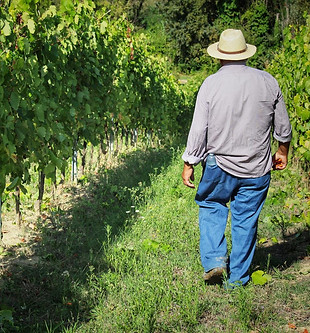

Tell us about the Marche — its grapes, its climate, its traditions. How do you see the region today compared to the one your parents knew? And could you paint us a picture of your vineyards and the landscape that surrounds them?
As we said before, the historical character of the region has profound significance for us. In the 90s, my father decided to honour the history of this place by re-rooting the same grape varieties that were cultivated in the Bonaparte era. These are the so-called international varietals, yet they form part of our estate’s legacy and helped to shape its identity.
Ribona has always grown in our vineyards, but it had never truly been valued as it deserves. Our focus on native grapes is not following a trend, but a genuine desire to express an authentic and unique voice.
For this reason, with Ribona we experimented various winemaking before finding the two versions that best express all the traits of this grape. Boccadigabbia Ribona highlights the more marine, snappy and joyful aspects of the grape. Le Grane, through a special vinification process, uncover the aromatic and floral expressions.
We do not deny what was done in the past, on the contrary, we treasure it, trying always to respect and to be true to the variety by enhancing its freshness and character.